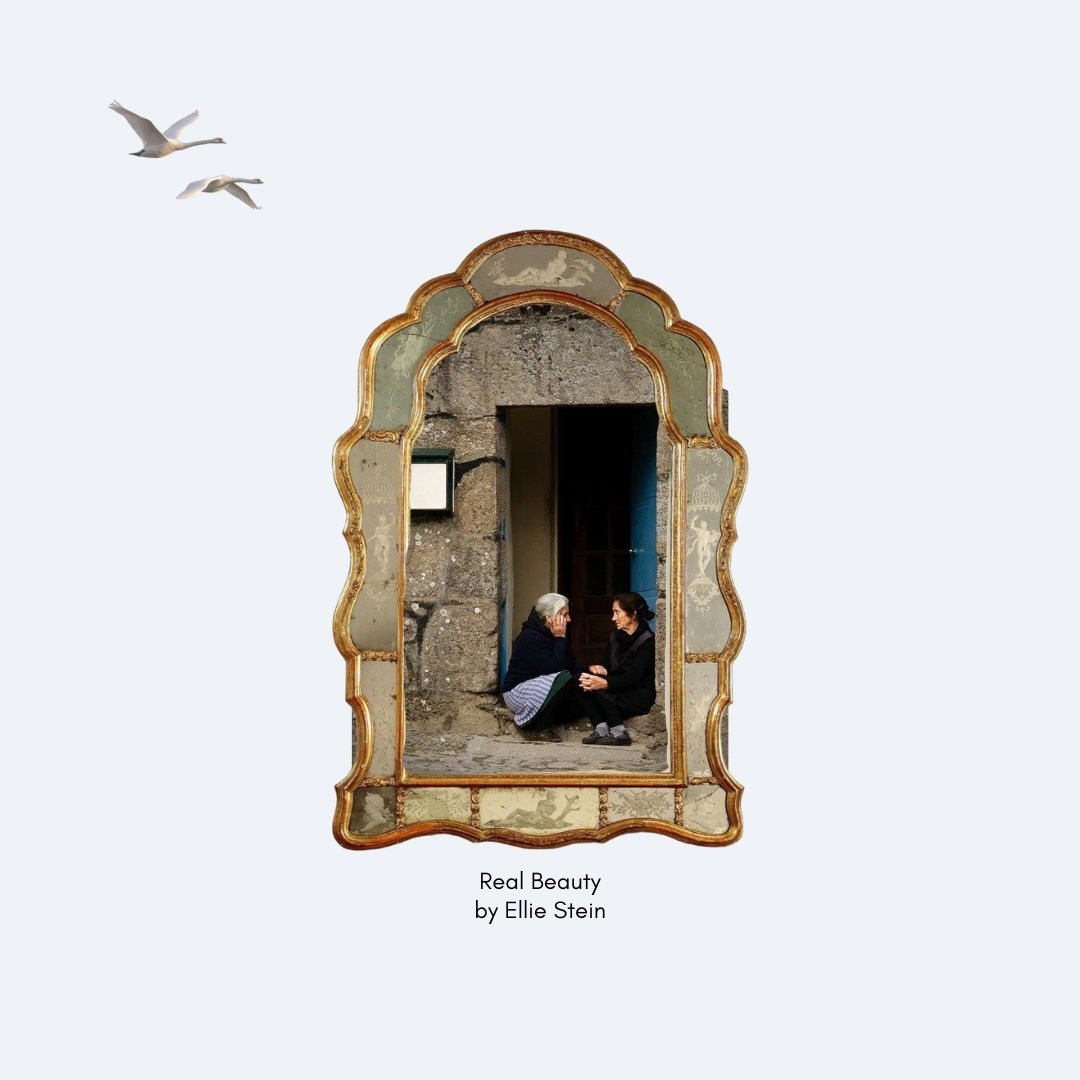
My mother talks incessantly about her jowls as she pinches the skin of her neck and pats her stomach with a self-deprecating thump. She comes back from the hair salon, relieved to have a new box of blonde dye in her hair, so she can feel young just for another while. She rages against her age, drawing it out over painstaking years.
But for the life of me, I cannot see her as anything but beautiful. We grow up idolizing our mothers as pinnacles of beauty, and it’s so strange to see her loathing the features I will always see as perfect.
Female aging is marked by changes that are inherently uncomfortable in a physical sense. But it becomes a psychological battle against time only because of standards that directly contradict nature.
Today, human beauty seems more and more to be defined by unattainability - what takes hard work, sacrifice, money, or a winning ticket in the genetic lottery to achieve. It is a victory over nature, as if the incredible privilege to be born a human being, just as we are, is not enough.
We worship nature – its grandness, its diversity, its evolutions. But we ignore these same things, even condemn them, in ourselves. Especially women; when we wrinkle, our hair darkens or silvers, our body composition changes, we are taught to hate ourselves for it. But everything alive undergoes the same progression, and we’ve always wondered at its beauty.
The wind and water that eroded the Grand Canyon trace valleys into our skin. The sun that bleaches the ground and greens the grass – it warms, freckles, and burnishes our bodies. Dewdrops ripen, soften, sweeten on the surface of leaves that shrivel and fall. How can we love this innate earthly transformation, yet idolize firm, unchanging versions of ourselves?
These wrinkles and ridges and marks are trophies of experience. Memories engraved in us like etchings in stone. Evidence that we have achieved vitality, not just an aesthetic of societally dictated worth.
Only we humans aspire to stay young, hard, and smooth forever. But that is not living, because life – sentience – is defined by change. We know there’s grace in natural change because we marvel at every sapling and sunset. We are beings just as they are, and as our bodies age, they gradually come to resemble the earth itself, which gives life to everything we know. That, undeniably, is real beauty.
No Comments.