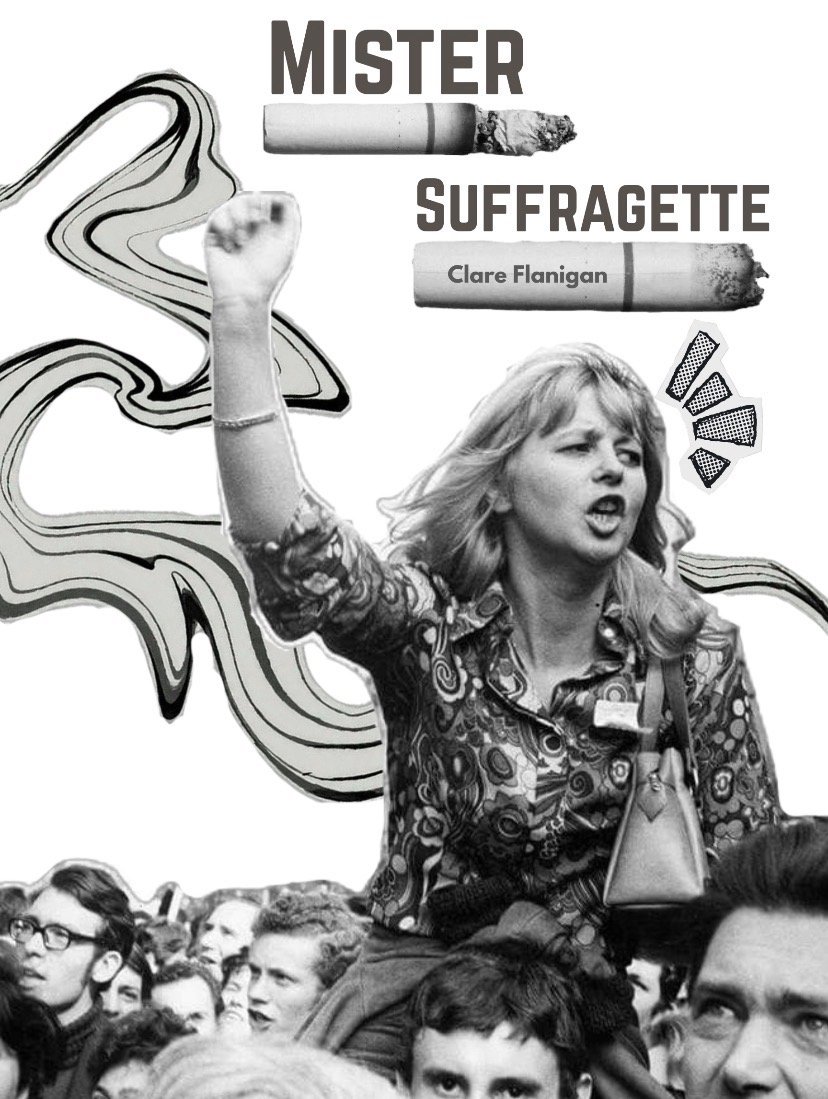
Last year, I moved into a new apartment, into a very small room with one small window. I spend most of my time sitting on my bed, window open, reading, journaling, and watching the sunset and the city skyline. It also opens up to my apartment complex’s parking lot. Said parking lot is home to many pregames, parties, and mixers, keeping me awake - not that I mind; as a nosy person, one of my favorite pastimes is eavesdropping.
One Friday night, last semester, a group of guys was topping off their big night out at the bars by chain-smoking with a side of political debate. Between their coughing fits after each puff, they so diplomatically asserted that they would never trust a woman to be president. I froze for a moment, astonished that what I knew so many guys around me thought, they felt so comfortable and sure saying out loud. I am not naive to shared looks between men when my friends and I bring up politics; what I can see playing behind their eyes and twitching the corners of their mouths into a smirk, signifying they can apparently “see beyond the guise” of women in power and I’m blinded by the frenzy of feminism. My shock began to slowly turn to anger. How can these boys say such a thing with such ease, matter-of-factness, and arrogance, completely unbothered that their words could be overheard by those who have experienced the adversity they’ve never even considered? They remain completely confident in their ability to retain their friends, girlfriends, job, and reputations after saying that. And they probably will.
There is no pretty way to tie this up. And I know my efforts in this essay are probably fruitless. I doubt a man will be scrolling through Studio 412 blog looking for some light reading and clicking on an essay about suffrage, but if he does, I know it will probably be interrupted by mockingly showing his friends some token lines taken out of context. But there is no happy ending, except for them. They can waltz through life, expressing their half-regurgitated views, protected by the haze of their cigarette smoke. The barrier they have created has made them seem untouchable, and therefore whatever they say is seen as gold by those in their circle.
I’d like to think of myself as an optimistic person. Extremely optimistic. However, when it comes to this, their words snuffed out my light. Maybe it is because my parents raised me on the sounds of what we coined as “angry divorcee music.” Maybe having my dad play Alanis Morissette's “All I Really Want” on car rides back from YMCA play rehearsal instilled these feminist values and lit a fire under me in this way. It is hard to form this type of anger into words that might make a difference or have any sort of impact. The audience that this would be directed toward would just as soon blame any sort of offense I took from this on my menstrual cycle and estrogen levels. The message has to be calculated and watered down, insulting my own intelligence just to be given the chance to be heard.
More recently, I did pick a fight with a man who tried to tell me that modern-day sexism didn’t exist, and if it did, we shouldn’t care because there is nothing we can do to fix it. This made me stop and check myself, and, of course, him. I thought back to all the waves of feminism that resulted in policy changes for women. I mainly cited the suffragette movement and the Seneca Falls Convention, explaining how they brought forth the 19th Amendment, none of which he had ever heard of. Looking at how far we have come, only to still be stuck so far behind. Looking at all the work previous generations of women have put in, only to be shot down by drunk college boys proclaiming their “emotions” make them unfit for office, and tuning out the suffrage lesson in their history courses.
In some ways, that boy was right; sexism will always be around. However, we can always and must always fight against it, using the movements of the past to inspire future change.
No Comments.