5 July 2024 — No Comments

If I Didn’t Post it, It Didn’t Happen

POIDH: Pics Or It Didn’t Happen

An acronym coined when social media was first created that still holds its meaning to this day.

At first, this phrase was used to refer to crazy or unbelievable things that needed visual documentation in order to be believed. As social media has developed, it has taken on a new meaning and is now applied to the more simple things.

Every once in a while I may find myself drinking Starbucks outside, reading a book, wearing some cute sunglasses, and thinking to myself: I need to document this on social media. This would make a great Instagram post. Everyone needs to know how I’m reading this book, how good my drink looks, and how the lighting in my backyard is perfect. And then when I try to take a picture and it doesn’t look the exact way I want it to, I get irritated or stressed out. Thoughts like “If I don’t post this, no one will know I have great taste in books,” or “If I don’t post this, no one will know how good my Starbucks order is,” or “If I don’t post this, who’s going to see my awesome outfit,” run through my head. 

Why can’t I just enjoy a peaceful moment alone, reading a book outside in the sun? Why is my brain conditioned to turn every nice moment into a social media opportunity? I’m sure many of us are guilty of the very same thing– at least, I hope it's not just me. This doesn’t just have to apply to documenting “cool” things you are already doing and then whipping your camera out after the fact. Maybe it means going to a party for 5 minutes with the intent of just taking a few pictures, and then leaving so that people will think you are a person who goes out and parties, when in reality you are a person who prefers to stay in. 

Our generation has grown up with Instagram, Snapchat, TikTok, Twitter, and more. Constantly comparing ourselves to posts we see online, whether it be other people's cute outfits, expensive vacations, or delicious meals. Social media is a huge, unavoidable part of life. Sometimes it can be a wholesome thing, showcasing pictures of cute puppies or videos of best friends reuniting with each other. It can also be an anxiety-inducing environment, from promoting unrealistic beauty standards to inducing severe FOMO.  

I’ve been trying to teach myself that there are so many more important things to worry about than curating a perfect Instagram post. This is a hard lesson to learn as a person who has grown up with social media, as I’m sure many people can relate to. 

In an effort to make social media more personal and less stressful for myself, I decided to hide comments and likes on everything I post. For me, this turns my Instagram account into more of a collage, a representation of who I am and the things I find beautiful that have nothing to do with seeming cool to anyone else except for myself. 

Documenting your life on social media, whatever form that may be, can often be an enjoyable, uncomplicated thing. But it can also quickly turn into a stressor. I am hopeful that one day social media can become more authentic, more positive, and more simplistic. It’s becoming increasingly important to remember that just because you didn’t post an Instagram story doesn’t mean you didn’t have a beautiful day at the beach. Just because you didn’t make a TikTok of your outfit doesn’t mean you never wore it or that it went unappreciated.

I think we are on the right track, one that will lead us to a world where posting is not a priority, but instead more of an afterthought, because I think that’s a healthier way to live.

Written by Julia Brummel

Edited by Lauren Deaton and Elisabeth Kay

5 July 2024 — No Comments

The Journey of Embracing Cultural Identity – Through the Eyes of an Undercover Minority

“You’re half and half,” she said. “Just like a creamer!”

Half and half. Two halves of a whole. American Asian. Amerasian. Coffee creamer, if you will: what my mother called me playfully. I’m made up of my mother’s resilience and my father’s perseverance. Internally, I embody my mother’s culture while I physically favor my father’s skin color. I am half Filipina and half Caucasian. Despite my Asian heritage, I am frequently presumed to be Caucasian due to the fairness of my skin (although with a tan in the summer, I am considered otherwise). As someone who is half Filipina with what many would call white-passing looks, I struggled to fully embrace and understand my cultural identity during my childhood. I was, although I hate to admit it, ignorant of the culture I am now proud of. Even so, ever since I was little, my mom always instructed me to be proud of being half-Filipina.

Growing up in a school community seriously lacking in diversity—the main component of the racial demographic being white—I found it embarrassingly easier not to mention my Filipino side or talk about it around my Caucasian friends in order for me to “fit in” more. Having to explain why I call my aunt and uncle Tito and Tita, and Grandma and Grandpa Lola and Lola on my mom’s side of the family felt uncomfortable and awkward to talk about. I know now that respect for elders is a huge aspect of Filipino culture, but at the time I didn’t fully understand that. I really regret not embracing my Filipino side when I was younger, and I wish I had felt more confident in my cultural identity. 

Throughout my childhood, it felt as if people at my school were playing a guessing game with my race. I often felt my biraciality was something people found difficult to wrap their heads around—something extraordinary. Especially at a young age, my peers saying, “You don’t look Asian” and my mom affectionately saying “Just tell them your mom’s brown,” made me feel conflicted about my identity. The assumptions of people trying to guess my ethnicity made me feel out of place—I was a puzzle being critiqued for the interlocking of its pieces. I felt tethered between my appearance and self, having no choice other than to voice the half of the identity no one could see on the surface. I didn’t want to do it in the way of just simply “proving” my Asian heritage because someone didn’t believe me, but rather in the way of voicing my pride for my Filipino side because I feel it is my responsibility to do so. My Filipino side may be invisible to many, but my looks don’t define me and my upbringing.

My cultural identity is not a perplexing jigsaw made for you to comment on the presentation of the pieces—Who are you to question the puzzle maker?

After I graduated, from what the locals call the “Wexford Bubble” of a school community and moved to college—it was eye-opening for me to experience such an inclusive community compared to the one I spent years growing up in. I finally felt like I belonged on campus; I was suddenly surrounded by others from many different backgrounds. My biraciality was no longer seen as something out of the ordinary.

“I never want to ride the subway again.”

Although I was born favoring my father’s fair skin, I sometimes wonder what life would be like if I had been born resembling my mother. Simply because I favor the caucasian features of my dad, I feel that I’ve dodged the bullet of the distressing, ever-present anti-Asian and anti-Asian American hate crimes. Yet I still feel fear, grief, and guilt for wondering if my feelings are justified by having white-passing privilege while being Asian American. The guilt of feeling scared for my mother while I myself will never be able to live vicariously through her and ever feel the amount of terror she feels. 

Are only 50% of my emotions acceptable?

Looking at Olivia Rodrigo in her prime today, I see her as an inspiration not only for her talent and success in her singing career but also because I can relate to her culturally. As she is also Asian American—half Filipina, and half Caucasian—I feel proud that she is open about her family heritage and ethnic background to the public. However, there has been an ongoing debate if Olivia is perceived as white-passing or not, to which there is no definite answer. One thing is certain, although she may have some privileges other Asian artists don’t, due to her being half-white, that doesn’t eliminate the Filipino half of her identity.

I still struggle with identity issues with being biracial, but I have come to terms with the fact that my physical appearance is not equivalent to an absence or diminishment of the culture that has been instilled within me ever since I was little. I can confidently say that both sides of my heritage combined have shaped my upbringing and made me the person I am today. By speaking out on my experiences and understanding what it means to have white-passing privilege while still fully embracing my Filipino culture I hope I can serve as a reminder for others to fully embrace their culture and who they are. Coming to terms with understanding my own cultural identity has been a journey from childhood to adulthood, but one that I’ve learned to embrace wholeheartedly.

Written by Sofia Brickner

Edited by Sydney Williams and Kate Castello

5 July 2024 — No Comments

A Girl That I Used to Know

I once knew a girl who had a scar on the right side of her bony nose—a deep red circle from her glasses nose pads. It’s what she’d tell people when they asked for a fun fact. She thought it was the most interesting thing about her.  

I once knew a girl who hit her growth spurt early. She towered over her classmates, including the boys. It made her feel like a boy. She tried to be smaller by forcing her shoulders to the ground. Her back morphed into the letter “S”, a snake that betrayed her. A male classmate once asked her why she had more arm hair than he did.  

I once knew a girl who had blonde hair. She rolled her khaki skirt too many times. Sitting behind her you could see her shoulder blades leaning in for a kiss periodically. I saw her present in class once, it sounded like she was crying.  

I once knew a girl who lived for others' happiness. Every day she would shuffle to the locker room after school, and trade her crested button-down shirt for a reversible jersey. She ran up and down the court, up and down the court, up and down the court. Her coach told her she could play next level if she tried hard enough. That was all she ever did.  

Tried.

I used to know all these girls very well because they used to be me. They still are me—but I’ll never be them again. Sometimes I think of them as lost friends, girls I left on good terms with and whom I look back on warmly. Other times I think of them as enemies, lurking in the shadows awaiting my eminent downfall, waiting to get their revenge on me for betraying them. I think all of them look at me with a tinge of anger—they never thought they would be replaced. They all thought they’d be me forever, laughing at the girl they sent to the sidelines, never thinking it would be them. Now they all sit in severance, waiting for the next transition, waiting for the girl I am now to get dethroned.  

I try to defend myself against them, ripping them apart. My cruel attempt at a power play.  

Why would she wear that?  

She looks fat.  

Why would she say that? 

Her smile looks dumb.  

These girls have no way of talking back to me—they’re defenseless. But sometimes I imagine what our interactions would be like, what they’d think of me now. Would they recognize me? I like to imagine nine-year-old me would look at me with pride, she dreamed of being an author and designer. 14-year-old me would probably look at me with confusion, you don’t live in New York? I don’t like to imagine what 17-year-old me would think. I worry she’d look at me with disgust upon the realization that I will not be graduating with a doctorate or any science-related degree. I know 19-year-old me would be proud that I found friends and love.   

As I get older my awareness of these girls grows—just as my awareness of time passing grows. Next year I’ll be popping the comfort of my university bubble. I still remember the girl I used to be when I stepped into this bubble, I can’t seem to grasp the fact I will not be the girl I am today in a year. I worry what 21-year-old me will think about myself in one year. Two years. Ten.   

I claim that all these girls are from my past, but really, they’re always present with me. Sometimes I catch a glance of them in the mirror or see them in the audience when my voice shakes. I pass these girls on the street, in class, at parties, in private. I carry all their baggage, all their anxieties, all their fears. It’s heavy—I can feel the pressure pushing down on my shoulders. But I also carry their memories, their joy, their passions. I would not trade those for the world. 

Written by Belle O'Hara

Edited by Kate Castello

5 July 2024 — No Comments

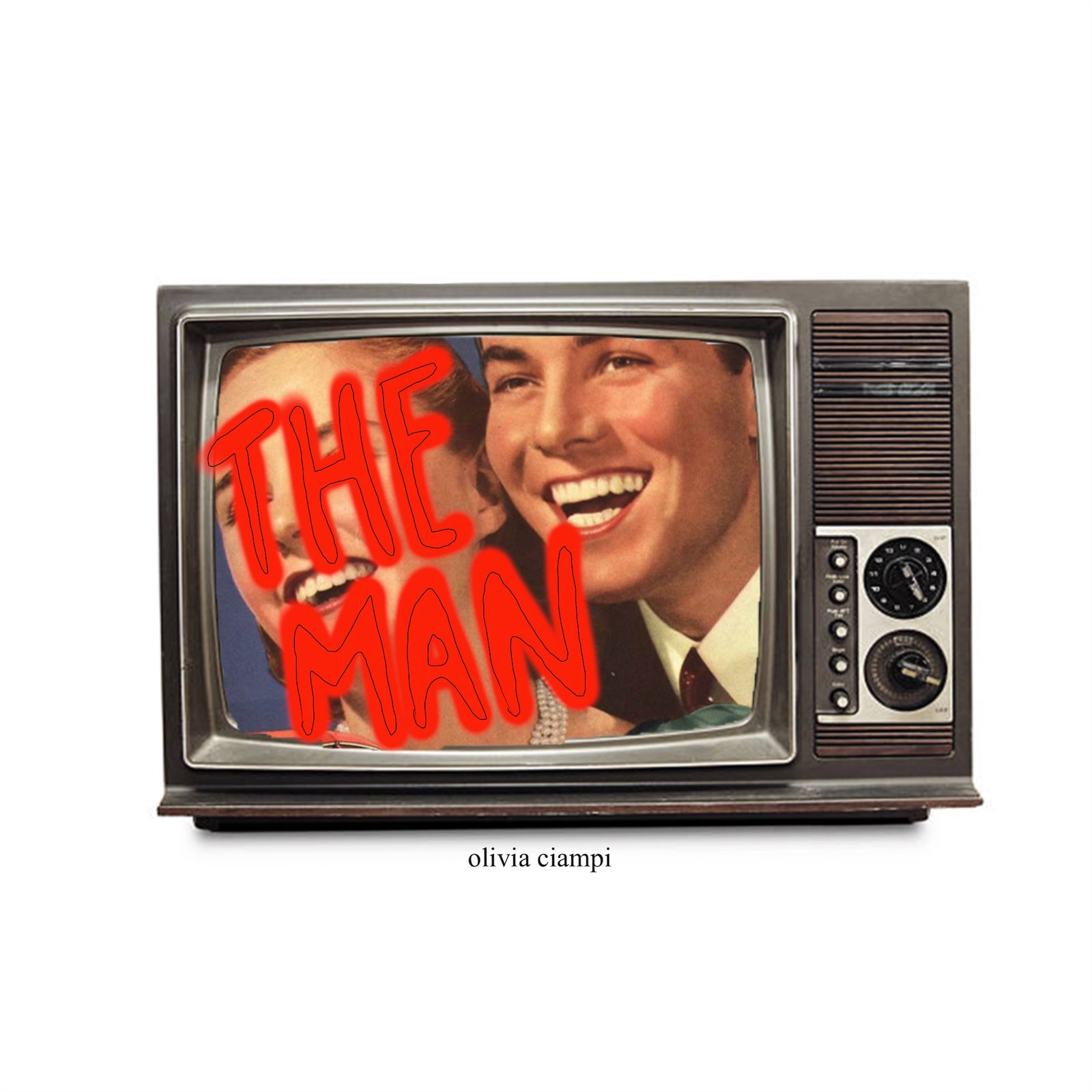
The Man

Growing up a girl, you don’t realize when you start looking at the women on your television screen more as guidelines rather than characters. You notice how they’re dressed, how they speak, how they are spoken to, how they react. You start seeing it in real life through an interview with your favorite character at the Kids Choice Awards, then red carpet events. You see negative posts about your favorite artists plastered over social media, news outlets, YouTube—erasing the woman you looked up to and replacing her with a villain, a crybaby, a drama queen. In one way or another, most girls experience a handful of these events growing up, but we don’t realize the impact the presentation of successful women in the media has on us. 

At age 10, Taylor Swift was my idol. I adored her in every sense, her music, her presence—I wanted to be her. At age 13, I hated her. I stopped listening to her music, poked fun at those who worshiped her the way I had years prior, viewing her as a grown woman who could only write music about her many boyfriends. The Times had dubbed 2014 “The Year of Taylor Swift”, but by 2016, the general media had turned against her. Her new media-produced image was reflected in the shift of her fan base: the many young girls just like me, who had idolized her, suddenly wanted nothing to do with her. In 2016, The Vulture described this period of Taylor Swift's adoration to have “vanished”, clearly showing this sudden (but thorough) erasure of the love many had previously held for her. Many media outlets painted her as anti-feminist, shallow, and “fake”, pulling evidence from song lyrics written by a fifteen-year-old girl, “feuds” elicited by grown men, and media-trained answers to targeted questions from reporters. We were conditioned to hate her through news stations and teen magazine articles. I held this hate until 2020, as a sophomore in high school, and I have my younger sister to thank for it; one of the—still many—“Swifties” who had not abandoned ship. I share this story to encapsulate the fact that, even as a self-identifying feminist for as long as I can remember, I was successfully brainwashed into hating Taylor Swift simply because, at the end of the day, she was a woman, she was successful, she was not sorry and would not stop. 

I recognized my passion for this unfortunate occurrence around the same time. Sitting through my first thorough listen of the “Lover” album, I came across the song “The Man”. To this day, the impact this song has on me is immeasurable. At age sixteen, I sat in the car with my mother and sister in tears after listening to an eye-opening pop song; every reason I had found to hate Taylor Swift was finally disassembled after three minutes and ten seconds. Taylor Swift’s “The Man’ captures the exact dilemma presented to successful women in the media: “I'm so sick of running as fast as I can, wondering if I'd get there quicker if I was a man, and I'm so sick of them coming at me again, 'cause if I was a man, then I'd be the man.” Regardless of how many awards a woman wins or records she breaks, she needs to do double the work, have double the impact, to even stand a chance of being placed on the pedestal beside her male counterparts.

This theme is carried across into the realm of the most classic Hollywood tradition: the red carpet. Events where celebrities of the highest caliber are mixed with up-and-comers, all dressed to the nines, and there to discuss their look and their work. While women and men working in entertainment face similar challenges in the sense of scheduling and work-life balance, the differing questions asked to male and female celebrities at these events paints a different narrative. Jennifer Garner presented this issue in her acceptance speech at ELLE’s 2014 Women in Hollywood event, where she described how her and her husband were on the same red carpet, but the questions asked to them were drastically different. She explains that, while she received questions about how she managed her work life and her family, he received no questions of the sort. Not only had he not heard these questions on that particular night, he never had, not once. Many other female celebrities have had similar experiences, and ELLE recognizes that they are also guilty of subjecting celebrities to different questions based on their gender. This led to ELLE’s initiative to flip the script; they decided they would be targeting work-family balance, beauty routine, and diet questions towards the men present on the next red carpet event—not the women. Many men responded to these questions in a joking manner, not taking them seriously, and the ones that did answer honestly shared that they felt no pressure to look a certain way or put a lot of time and effort into their appearance for these events. While this alone shows a drastic difference between the societal pressure on men and women to appear a certain way, it is also important to address the fact that a woman would not be seen as funny for responding to questions this way. A woman would be seen as rude, ungrateful, and condescending. 

Taylor Swift says it best in her interview with CBS, “There's a different vocabulary for men and women in the music industry…A man does something? 'Confident and bold.' A woman does it the same way, and she's 'smug.' A man 'stands up for himself,' [whereas] a woman 'throws a temper tantrum” (2). While working in the same entertainment industry, the spotlight shed on men and women are inherently different. This is portrayed in every aspect of the media and is a trend that can be found in every professional setting a woman enters. A woman’s success can be diminished with one article, her strategy painted as manipulation, her talent tied to the man she’s dating at the time. What society is asking of us is not the same. This is made clear to us at a young age, before we can even recognize the disparity we are signed up for at birth. I was lucky enough to be surrounded by strong women, and raised by a stronger one, who saw this discrepancy, which allowed me to see it too. As women, we should not have to accept this societal pattern on our television screens, or in our favorite magazines, and we definitely should not have to face it ourselves on a day-to-day basis.

Written by Olivia Ciampi

Edited by Briana Malik and Kate Castello

5 July 2024 — No Comments

It Gets Better, I Promise

I would love to know who decided to keep it a secret that your first year of college is terrible. No exaggeration, it is flat-out awful and I feel like no one prepared me for that. This isn’t to say that there aren’t outliers– statistics class taught us all that even in a normal distribution, there will always be data that doesn’t fall in line with the vast majority– but, I would venture that for most of us, it is extremely difficult to be a college freshman. 

All throughout high school, I used to daydream about college. The fresh start, new friends, endless clubs to join, and classes that I actually wanted to take were beyond alluring. For four years, any social mishap, embarrassing mistake, or traumatic misstep was only temporary, an afterthought that I could chalk up to silly high school memories soon to be laughed at with an abundance of college friends. 

When the time finally came to move 6 hours from home and the realization that I was leaving behind everything and everyone I had ever known set in, I started to waiver a little bit in my intense faith that college was a magical cure-all. I still held out hope though. “This is what college is all about,” I thought. I was ready to step outside of my comfort zone and the confines of the small town that I had grown up in. Let me tell you, there was no “stepping.” The only way I can describe my transition to Pittsburgh is if you can imagine pole vaulting out of your comfort zone and then looking back to realize that it had altogether vanished. 

No one warns you that making friends isn’t as easy as walking up to people and asking “do you want to be friends?”. No one warns you that classes really are hard and a big jump from high school. No one warns you that it just feels so isolating. I spent an entire semester clinging to platitudes like “keep your head up” and “hang in there!”. I couldn’t fathom ever feeling like Pittsburgh was my home or finding people that made me look forward to coming back year after year. 

Winter break went all too fast and before I knew it, I was begging my mom not to leave me there again. As dramatic as it sounds, I pleaded and cried, desperately trying to avoid going back to a dorm room that felt steeped in sadness and a campus that acted as a looming reminder of how far I was from my family and childhood friends. 

One of the biggest lessons I learned from my freshman year (as cliche as it sounds) is that it just takes time. As the second semester went on, I began to form a routine at school. I created a mindful set of steps to walk through and each day began to get easier. Slowly, I started to recognize people in my classes and form relationships outside of the classroom. I became more involved in on-campus organizations and honed in on my studying skills. The longing for home began to ease and by the end of the year, I wasn’t just doing okay, I was genuinely happy. Never in my life had I been a particularly patient person, but I discovered that a little bit of patience was all it took to get acclimated to my new environment, and from there, I thrived.

I am so serious when I say that no amount of money could convince me to live my freshman year over again. If you’re one of the lucky people who doesn’t relate, I mean it from the bottom of my heart when I say that I am so happy for you. But if I hit just a little too close to home, just know it gets better, I promise.

Written by Emily Harper

Edited by Edited by: Diya Aneja and Elisabeth Kay

5 July 2024 — No Comments

Escapism

I often find myself zoned out in the shower; I come up with elusive stories or recall random info from my daily Twitter scroll while my conditioner soaks in my hair. I come up with movie ideas, take part in interviews as if I’m famous, write poems, and spin webs of how everything in my universe is connected. Eventually, I come to and realize my fingers are pruning, so I turn to rinse my hair.

I have a deep fascination with pop culture and fictional worlds. Typically, I feel alone in this fascination. “No way others are dedicating this much brain space to their favorite movies, shows, songs, and actors,” I remind myself almost daily. But is this belief of mine true?

Most, if not all people, daydream to get through the day. It is almost a form of adaptation humans have built to survive the sometimes monotonous world we’ve created. But who’s to say what it is that others dream about? It could be what they might do when they get home, an exciting event a few months away, meeting their favorite celebrity, or something completely different. What I do know, however, is that most humans have an inextricable tie to media in the twenty-first century, and whether we like it or not, phones and our perpetual access to it, are literally in our pockets. This means that there is a pretty slim chance that I am the only one who uses pop culture as an escape route in my daily life. 

We see it a lot in the public sphere now, that word: parasocial relationships. Each time you scroll through your Instagram feed and a post from Zendaya is sandwiched between a girl you went to high school with and your younger brother, it feels like you are connected, as if through some web you really know each other, maybe even on a metaphysical level. But when does this behavior get taken so far that it requires calling out? 

Towards the end of the summer, Taylor Swift was attending her friend's wedding in New Jersey. When fans caught wind of this, they flocked to the venue, getting hoisted up to peer through windows in hopes of catching a glimpse of the star. This kind of behavior is an example of an unhealthy relationship, with a stranger, mind you. Though it is fun to indulge in fictionalized versions of these people, it isn’t okay to invade their personal space. Usually, I just stick to the daydreams. 

Post-shower, I set my phone down on my nightstand and shuffle into a comfortable position. As I close my eyes, trying to go to sleep before my 9 a.m. the next morning, my mind is awake. Deep in my neural pathways, I am on set rehearsing lines with my co-star, getting a quick nap in my trailer, and chugging coffee in between takes with my parka on. I go on like this until my daydreams drift into dreams. 

This is how I get through my days, and it brings me great joy. My mind is my greatest weapon, so I feel no need to sit outside the most popular New York restaurants to run into someone famous. Instead, I could be inside the restaurant and part of the inner circle, without the hefty price of a plane ticket.  

I don’t like to indulge in the concept of “guilty pleasures,” because you should feel like you’re able to express your enjoyment of something, no matter how silly you feel it may be. I bet you, a million times over, someone in the apartment right next to you or on the opposite end of the bus or one of your best friends is doing it too.

Written by Leighton Curless

Edited by Meagan Meyer & Elisabeth Kay

5 July 2024 — No Comments

Finding Passions in Different Places

As a child, I jumped from activity to activity hoping to find one that would stick. 

Seriously, my parents tried so hard to find something, anything that I liked. We began with ballet: I didn’t really have the patience. Then, swimming: I was pushed a bit too hard and, honestly, I was a delicate child. Soccer: too much cardio for a girl that just wanted to talk about American Girl dolls. Then, violin: I played for nearly a decade until a voice deep inside told me I wasn’t good enough to keep playing. Horseback riding: got into a tiff with one of the other girls, left a bad taste in my mouth for the culture. Hip-hop: forgot half of the routine when it came time to perform. Art classes: made one solid piece for our living room and claimed it was sufficient. 

The thing is, I did enjoy trying out new activities—I just never quite stood out. When I didn’t become a prodigy within the first ten seconds of trying, I would become violently uncomfortable. I’ve always hated being bad at anything (and don’t even get me started on any type of water game). 

I have interests, of course. I could talk about pretty much all of Martin Scorcese’s films (not in a film bro way, I promise), and give a detailed description of every Amy Winehouse song, but being surrounded by people who can literally lap me multiple times on the track or can belt out a perfect note—is truthfully horrifying. We’ve all heard the expression, “Comparison is the thief of joy,” but it’s inevitable when your environment is made up of well-rounded people. 

I’ve always appreciated these utterly fascinating individuals though. In all honesty, I feel envious that they’ve found the thing they love and enjoy so much. There’s a sense of pride that they exert when something related to it comes up, and I’ve since realized I love engaging with these people. 

People are what I am fascinated by. 

I love seeing my friends laugh, and I enjoy watching their facial expressions when they talk about a situation they just can’t seem to get over. Being in discussions together about our histories and backgrounds often changes our perspectives of one another. Bringing all sorts of people together and just seeing if they click brings me the utmost joy. It’s an indescribable and exciting feeling when you find a few people who mesh perfectly with you. Even if it’s a person I meet one night and never see again, I’ll continue to bring them up for the next few months just because of one unique quality they had. 

As a freshman, I hope to be introduced to lots of different interests and explore even more passions. I pledge to continue my ways of childhood and put myself in a weird range of activities.

Hopefully, something will stick! 

Written by Julia Maynard

Edited by Allison Defriece and Kate Castello

5 July 2024 — No Comments

A Love Letter to My Childhood Home

To My Childhood Home,

I’m writing from my first apartment’s front porch, the one I’ll be moving out of come August. I have no attachment to this apartment—unlike my home forty minutes east of Pittsburgh in Latrobe, Pennsylvania. I grew up in a small, what my friend Bella, calls a “mountain town” outside of the city. The people there love to spread the town gossip like it's nobody’s business but their own, and treat the Fourth of July as if it’s a holiday the town made up for its own over-the-top festivities. 

Latrobe is not a place many call home—not even my parents. My mom is from a tiny town in Indiana, small enough to only have a five-way stop sign in the center of town and that’s it. My dad is from Uniontown, south of Pittsburgh, and by god am I glad we didn’t move there. Instead, my parents settled on Latrobe and built a new life for themselves, my brother, and me to form our own, unique lives. I’m thankful my parents moved to Latrobe because it is where I found my best friends—my two neighbors who turned into the sisters I never had—and a life for myself. I know everything I know today because of Latrobe and for that, I will forever be grateful.

However, not all stories have a happy ending. 

My parents divorced in 2020, leaving our family split into four, fractured pieces. My father left in pursuit of his own happiness; he walked out one day during the pandemic and didn’t look back on the pieces he left behind. My mother fell apart. Her husband of almost twenty years had left her for the simple reason, “I’m not happy.” My brother took a vow of silence, maybe if he didn’t speak about it, it would go away. 

But I chose to talk. I chose to cry. And I chose to scream.

The place I called home was going up in flames and I felt partially to blame. Was it something I did? Was it something I said? I asked my brother an assortment of questions on drives when I just needed to go somewhere to sob to Phoebe Bridgers. He gave me no replies, which made me feel crazy. How can you not feel anything? Our dad just left us and you feel NOTHING? He chose silence. 

Maybe it was his form of protecting his peace? I don’t know. All I know is that the family portrait on the wall was shattered, like the glass holding it together in its frame. My life as I had known it was broken.

Telling my friends was hard because Latrobe isn’t a town where people get divorced. All I ever heard from people was their pitiful “I’m sorry”— talking began to feel tiresome and useless. 

A few months into the divorce, my home started to feel like a house. A place we came into and immediately shut our doors, ignoring each other as if we were suddenly roommates and not a family. Without my dad, I felt as if the world had come to a screeching halt. 

During the months without my dad in the house, I opened up some boxes of memories he had left for us to sift through and I came across a camera with our home video tapes. One tape was of the day I was born, and I pressed play, nervously waiting to see what was on the other end. The video started, showing my dad holding a baby version of me, born only hours before. What struck me most was not that my dad looked like a child, but what he said to the camera. He said, “Hi Will, I want you to know that we love you,” and I had to pause the video before I started to ball.

The twenty-nine-year-old version of my dad didn’t know he had told his seventeen-year-old son that he loved him, and I needed that. I needed him to give me reassurance during a time of uncertainty—especially during the pandemic. My house had finally felt like it was my home again, and I packed up that box to save as a memory. Now, there are many boxes in my basement: they’re sitting and waiting for someone to move them to another town far away from Latrobe. After my Mom decided to move back to Indiana in 2020, I would tell my friends, “Just a few years from now my Mom will move away!” But a few years have passed and now I’m the one that's moving.

Everything in that house is a part of me. The memory of my friends dyeing their hair in my bathroom, my bulldog coming home for the first time with us, and the many dinners at the table with family and friends. I chose to leave my home not with the anger I used to have, but with the love that filled the hallways I used to run down with my brother. I chose to leave my home with the same comfort my mother gave me when I ran into her room scared of a monster under my bed. I chose to leave my home the same way I came into it, with love. 

From the wooden floorboards, to the fake granite countertops, to the hole in the wall we moved an ottoman in front of, to the doorway that I will walk through one last time. It has been a journey—it has been a life. I am so glad that I was able to call you home.

Love,

Will

Written by Will Beddick

Edited by Elisabeth Kay and Kate Castello

5 July 2024 — No Comments

Most Likely to Not Know Who I Really Am

When you realized what the word “college” represented, what was your reaction? Was it excitement about leaving home? Sadness because you were leaving your friends? 

What about fear? 

What they don’t tell you about going to college is the amount of pressure there is to find out who you really are in the next four years. I imagined myself immediately transitioning into college as the same bubbly, outgoing friend I was in high school. Don’t get me wrong, I haven’t had a particularly hard time making friends, and yet…

I still feel like a fish out of water. 

Perhaps it’s a dramatic idiom, but simply put, I am unapologetically awkward. I laugh at the wrong time, I hate having nothing to contribute when someone asks for my opinion, and I have no idea how to engage in small talk without silently praying to be run over by the Port Authority bus. 

It’s like there’s a switch in my brain I unwittingly turn on to embarrass myself—as if my subconscious wants me to make a fool out of myself for others’ enjoyment. And of course, in the (frequent) instances where I do embarrass myself, I never let myself forget. 

A few weeks ago I was studying with some friends and we were engaging in a normal conversation—the occasional fake-mean, bitching back and forth, and roasting each other—or it would have been normal if I knew exactly who my audience was, but I only knew four out of the six people sitting with me. So, when I accidentally took our bantering a little too far by jokingly berating one of the two people I didn’t know, I was left with awkward, uncomfortable silence. Arguably, it was warranted, considering I had just aired out this guy who didn’t even know my name (and I hate to say it but I didn't even know his). I admit that I got carried away with the joke, but I had just committed what felt like social suicide. Obviously, I left immediately and went home to scream into my pillow, but why?! What was it all for?!

 It’s as if something hiding in my head takes over and chooses to embarrass me in ways unimaginable compared to how I used to embarrass myself in high school. Even better, I just asked a friend of mine if she wanted to hear the beginning of this article and her response was, “I feel like you’re just gonna read it to me anyway.” GOD, WHY am I asking to be embarrassed? It’s like the Grim Reaper is looming over me, but instead of dealing out death, he deals out humiliation and uncomfortable silence.

Now, you may think, “Oh Will, this is probably all in your head,” and that could be true; but I would be lying to myself. For years, I’ve been an incredibly awkward person. It all started with stage fright as a young child and the consequence of the spotlight hitting my face as I sang my first solo. As I write this, I am cringing at the face I must have been making as a nine-year-old.

Obviously, I haven’t gotten over it. 

Coming to college, I didn’t expect my awkwardness to take center stage, but that’s where my realization lies. Maybe this is who I really am, awkward and embarrassing mixed with bubbly and outgoing. Coming to this conclusion took a lot of self-reflection, (which was my backup plan after a New Yorker article wouldn’t reveal why I’m so socially inept). I’m even beginning to embrace that part of myself and not wallow in the embarrassment—although it’s easier said than done. It’s especially infuriating to be fed the lie that awkwardness is just self-failure, or that you have to put yourself out there more or act in a certain way to get attention. 

With that comes the ability to stop listening to what people think about you and I promise, I’m trying to listen to my own advice. Screw the things left unsaid at the library table or the Irish exit where everyone clearly saw me walk out without saying goodbye. Awkwardness is just part of who I am. I appreciate it for leading me onto a path of self-discovery and not for pushing me to close off that part of myself to others. I am proud to be awkward! Okay, I’m never saying that again, that was embarrassing.

Written by Will Beddick

Edited by Priyanka Iyer and Kate Castello

11 March 2024 — No Comments

Why Are We Obsessed With the Dress

It’s Sunday morning, and my sisters and I are piled on my grandmother’s bed watching TV. If we were home right now, we would be getting ready for church, but our grandmother isn’t religious and so we engage in a different kind of Sunday ritual at her house: Say Yes to the Dress. As dozens of white dresses parade across the screen, we debate which is prettiest, which the bride will choose, and whether her mother’s comments are helpful or bitchy.

If you haven’t heard of SYTTD, go spend a few hours watching clips from the show’s 19 seasons and 2 locations (Kleinfeld’s in New York is superior; you can fight me on this). Here’s the basic premise. Bride needs a dress. She has a huge budget. To help decide, she brings an assortment of friends and family, helpful and unhelpful. She tries on three dresses before she decides which one to say “yes” to. 

The reason for my long-standing attachment to the show is simple. Growing up, I lived and breathed weddings. My dad, an Anglican pastor, regularly officiated the weddings of family friends, and I imitated him at every mock playground wedding, looking sternly at my friends and reciting, “Do you take this woman…?” But my obsession mostly grew at my grandma’s house, where I spent afternoons paging through wedding planners’ books and trying on stowed-away wedding dresses with my sisters. Each dress told a different story: my grandmother’s dress, so tiny I’ve never been able to fit it…my aunt’s, a poofy product of the ‘90s, covered in hand-sewn seed pearls…my mother’s a stark contrast, extravagantly simple…and the ancient great-great-grandmother’s dress, yellow with age. We pulled out photos of that last wedding, the bride shaking with laughter, her husband’s barely-contained grin. 

My perspective on weddings in general, and SYTTD in particular, evolved with every passing year. At eight, weddings seemed wonderful because they were an excuse for a party and a pretty dress, with the groom as an afterthought. At boy-crazy thirteen, weddings were not only the most important day of one’s life but also the end of all unhappiness. Once the vows were said and the bouquet was thrown, the bride and groom rode off into the sunset and never argued, fought or got fed up with their in-laws. 

Now that I’m eighteen and a cynic, weddings are a big question mark. Is there really any guarantee of happiness at the end? I wonder. All the little conflicts on SYTTD between the bride and her parents, sisters, in-laws, or fiancé could be overblown to make the show more dramatic, or they could be cracks in relationships that will eventually grow to fissures. The main conflict on the show is always the bride having to defend her favorite dress to her friends and family. As she inevitably falters before their disapproval, I’m reminded of shopping with my maternal extended family. I know the pressure of standing in some boutique’s dressing room before your grandmother, mother, aunts, sisters, and female cousins as they give their opinions on a dress you thought was cute. I know all the soft-pressure techniques the brides use to try to convert the dissenters. I know the happiness of finding something everyone likes, and the disappointment later on, when you realize you actually hate it.
But if Say Yes to the Dress has a message, it’s this: It’s your wedding and your choice. The hosts and assistants are masters at helping the bride realize this. In one episode, the bride’s mother belittles, degrades and gaslights her daughter until she ends up rejecting the dress she loved. At the end of the episode, the bride sits down with Randy, the New York host, and says “I don’t know what to do.” They talk about the situation, and Randy tells her, “At some point, you have to think about not disappointing [yourself].” Hearing Randy give that bride his support and room to voice her opinions almost had me in tears. Although we never find out whether the bride ended up getting the dress she loved, she ends the episode by standing up to her mother. That’s the power of Say Yes to the Dress. It may be a formulaic reality TV show with predictable outcomes (she’ll find a dress, someone will cry), but it’s also surprisingly empowering.

Written by Lizzie Dickerson

Edited by Kate Castello and Madi Milchman