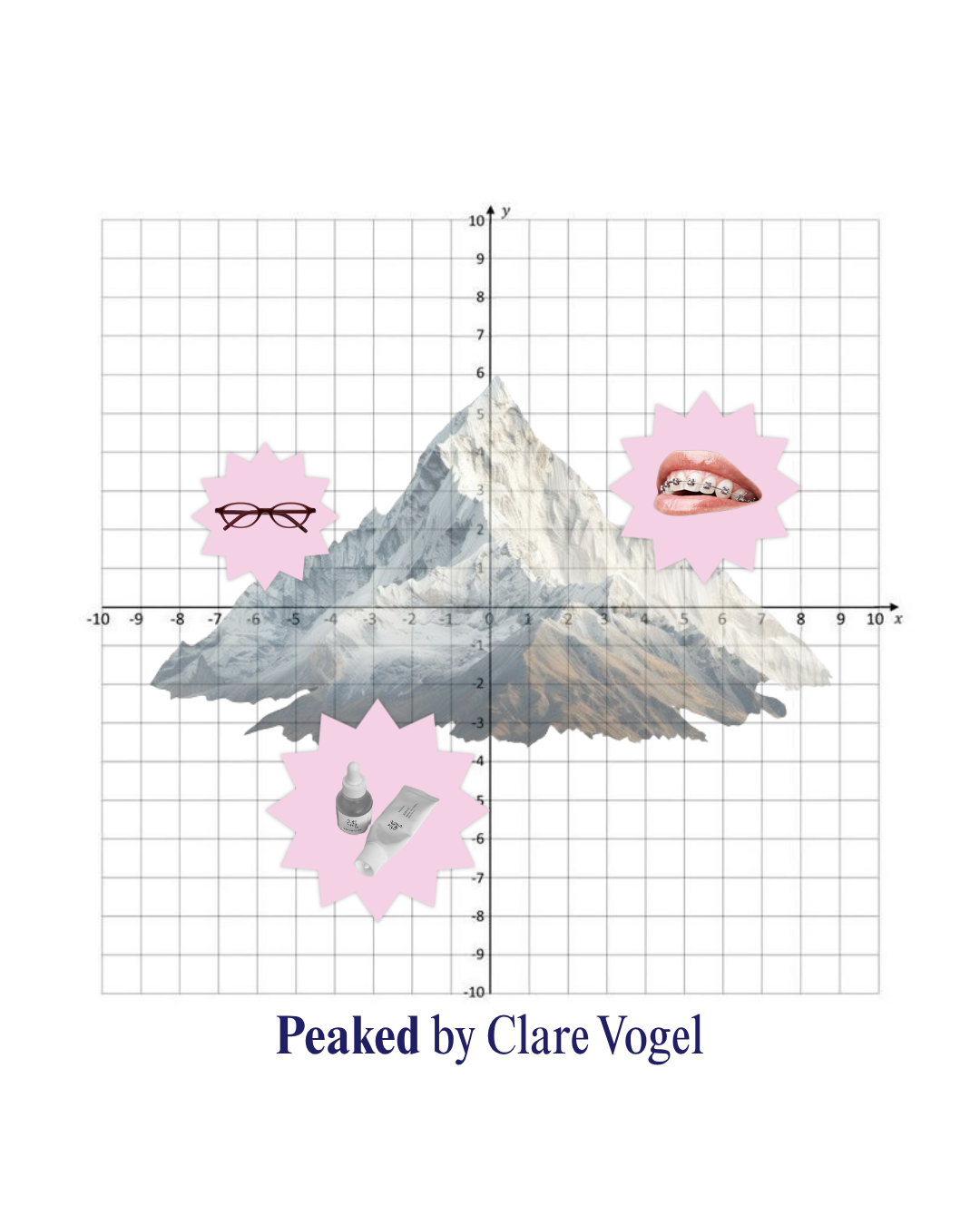
At 16, my teeth shifted from their position once perfected by braces, leaving me with an ugly snaggle tooth. At 19, I developed an intolerance for lactose. At 20, I gained 30 pounds in the span of eight months. At 21, my worsening hormonal acne and deteriorating vision were unignorable. An ophthalmologist gave me glasses and a dermatologist gave me prescription skincare. I bought clothes that fit my new body. I began taking Lactaid when needed.
I learn to move on. It does me no good to agonize over the person I used to be. I am better off taking these hits as they come, growing with my changes, and accepting that it truly is not that serious to gain weight or have acne. And yet, fear festers in my bones when I am reminded I will live the rest of my life with less than 20/20 vision, unable to eat whatever I please without checking what it contains. I used to be grateful I didn’t suffer from these ailments. Now I must place my gratitude elsewhere.
Sometimes I forget a lipstick in the pocket of my pants when I run them through the laundry and nearly all of my most-worn items become speckled with imperfections. I kick myself for making a foolish mistake, but try to not wallow in the regret. I can not wish away stains. I can, however, acknowledge that clothes hold no real value. This feels similar to my bodily imperfections. I’m able to ignore my teeth most of the time, but I become uncomfortable and insecure when I feel how far my front right tooth sticks out. I notice it in photos and regret not wearing my retainer enough as a teenager. It’s just a tooth. It holds no real value and reflects nothing of my personhood.
I think many women in the 21st century suffer this same type of existence – knowing the insignificance of surface-level complaints, but feeling their weight regardless. I am told to care about my skin and then I am told I am shallow for caring. Joan Brumberg wrote a chapter in The Body Project: An Intimate History of American Girls titled “Perfect Skin” in which she explained the origins of our obsession with acne. She explains that parents saw their child's appearance as necessary to success, and pimples were seen as a sign of moral failure. By the mid-1900s, acne was causing psychological distress in adolescents, as it was seen to block economic opportunity and result in failed performance. The pressure to be blemish free is inescapable, but I’m not sure it’s where I owe it to myself to place my energy.
Perhaps the adage “change what you can, accept what you can’t” is relevant here. Was it laziness that made my teeth this way? Am I doomed to continue my downfall if I don’t wear my glasses? Is the medical field correct when they insist my mental health will improve if my skin clears? Or are they at fault, profiting off of obsession with appearance? Can I single-handedly reframe how beauty is perceived by choosing not to care? Or am I lying to myself, forever a product of the society I reside in?
No Comments.